
A Design Lover’s Guide to Houston: Architecture, Interiors & Hidden Gems
Houston is not a city that announces its beauty all at once.
Unlike destinations where architectural identity is immediately obvious, Houston unfolds gradually. It is layered, complex, and constantly evolving – an environment where historic structures sit alongside bold modern towers, where art and architecture intersect in unexpected ways, and where some of the most compelling design moments are often the least obvious.
For those seeking a true Houston architecture guide, the experience is not about checking off landmarks – it’s about learning how to see the city.
At the center of that perspective is The Laura Hotel – a property that reflects Houston’s unique blend of history, design, and modern refinement, and serves as an ideal base for exploring the city’s architectural story.
Downtown Houston: A Skyline Built by Ambition
Houston’s skyline is one of the most striking in the United States, shaped largely by the city’s rapid growth during the 20th century.
Downtown evolved from a modest collection of mid-rise buildings into a dense vertical landscape, with a major boom in skyscraper construction during the 1970s and 1980s. This period gave rise to iconic towers like the JPMorgan Chase Tower, which remains the tallest building in Texas, standing over 1,000 feet tall.
What makes Houston’s skyline particularly compelling is its diversity. You’ll find Art Deco influences, modernist glass towers, and postmodern designs coexisting within the same visual frame. The result is not uniformity, but contrast – and that contrast is what gives the city its character.
Staying at The Laura Hotel places you directly within this architectural environment. Located in Downtown Houston, the hotel allows you to experience the skyline not just as a backdrop, but as part of your daily rhythm.
The Laura Hotel: A Design Story Rooted in History
Before stepping out to explore Houston, it’s worth recognizing that your architectural journey begins inside the hotel itself.
The Laura Hotel draws inspiration from the steamboat Laura, tying its identity to Houston’s early history as a port city. This narrative is carried through the property’s design, which blends historic influence with contemporary elegance.
Public spaces feel curated rather than generic – featuring art-forward interiors, layered textures, and a sense of atmosphere that reflects Houston’s creative energy. Guest rooms continue that experience with floor-to-ceiling windows, allowing natural light and city views to become part of the design itself.
With 223 rooms and suites, including Corner Panoramic View Kings and Junior Balcony Suites with private terraces, the hotel offers spaces that feel both elevated and livable. It’s not just a place to stay – it’s part of the architectural conversation.
Historic Foundations: Where Houston Began
While Houston is often associated with modern development, its architectural roots run deeper.
One of the most significant historic structures in Downtown Houston is the Merchants and Manufacturers Building, built in 1930 in an Art Deco style. At the time of its completion, it was the largest building in the city and remains part of the Main Street/Market Square Historic District.
Nearby, Houston City Hall, completed in 1939, stands as another example of Art Deco influence, with its limestone façade and detailed carvings reflecting the city’s early architectural ambition.
These buildings provide a foundation for understanding Houston’s design evolution. They remind you that the city’s modern identity is built on layers of history – each one still visible if you know where to look.
Modern Icons and Architectural Innovation
Houston’s architectural story doesn’t stop with history – it continues through innovation.
The city is home to works by globally recognized architects, including I. M. Pei and Philip Johnson, whose influence can be seen in structures like the Williams Tower and surrounding urban design elements.
Another standout is Pennzoil Place, widely considered one of Houston’s most important architectural achievements. Its twin-tower design redefined skyscraper aesthetics and remains one of the city’s most celebrated buildings.
What makes these modern structures compelling is not just their scale, but their intent. Houston architecture often responds to climate, space, and function—creating buildings that are not only visually striking, but also deeply practical.
The Quiet Side of Design: Museums, Light, and Space
Some of Houston’s most memorable design experiences are not found in skyscrapers, but in quieter, more contemplative spaces.
The Menil Collection, designed by Renzo Piano, is a masterclass in restraint – an architectural approach that emphasizes light, proportion, and connection to the surrounding landscape. Nearby, the Rothko Chapel offers a completely different kind of experience, blending architecture, art, and spirituality into a space that encourages reflection.
These spaces highlight an important aspect of Houston’s design identity: not everything is meant to impress at first glance. Some of the city’s most powerful architectural moments reveal themselves slowly, rewarding those who take the time to engage with them.
Hidden Design: The Unexpected Details
Part of what makes Houston so rewarding for design lovers is the presence of hidden or lesser-known architectural features.
One of the most unique is the Downtown tunnel system, a network of underground corridors connecting buildings across multiple city blocks. Originally developed in the 1930s, the tunnels now function as a secondary city – complete with dining, retail, and services.
While primarily used during weekdays, the tunnels offer a fascinating glimpse into how Houston adapts its built environment to climate and functionality.
Other hidden design moments can be found in smaller details – public art installations, historic façades tucked between modern buildings, and spaces that blend architecture with landscape in subtle ways.
Interiors That Reflect Houston’s Identity
Houston’s design story is not limited to its exterior architecture.
Interiors across the city – from restaurants to cultural spaces – often reflect the same mix of modernity and history. Materials like stone, glass, and metal are used alongside warmer elements, creating spaces that feel both contemporary and grounded.
At The Laura Hotel, this interior focus is especially evident.
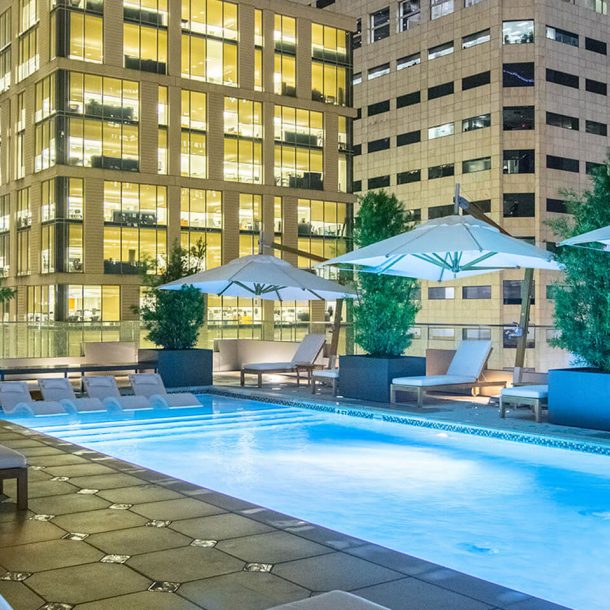
Dining spaces like Hull & Oak incorporate Southern influences with a modern aesthetic, while The Bar at The Laura blends design, music, and atmosphere into a space that feels distinctly local. The hotel’s rooftop experience, The Deck, adds another layer – combining skyline views with a social, design-forward environment.
These spaces reinforce the idea that design in Houston is not confined to buildings – it extends into how those spaces are experienced.
Designing Your Stay Around the City
The key to experiencing Houston as a design destination is not to rush.
Instead of trying to cover the entire city, focus on a few areas and allow time to explore them fully. Downtown offers a strong starting point, with its mix of historic buildings, modern towers, and cultural spaces all within close proximity.
From The Laura Hotel, you can build a day around this approach:
- Morning: Explore Downtown architecture and public spaces
- Midday: Visit museums or cultural landmarks
- Afternoon: Return to the hotel for spa or pool time
- Evening: Experience Houston’s design through dining and nightlife
This balance between exploration and relaxation allows the city’s design to reveal itself more naturally.
A City Defined by Contrast – and Cohesion
What ultimately makes Houston compelling for design lovers is its ability to hold contrast.
Historic and modern. Bold and understated. Functional and artistic.
These elements don’t compete – they coexist, creating a city that feels dynamic and layered rather than predictable.
The Right Place to Experience It All
A strong Houston architecture guide should do more than list buildings – it should help you understand how the city fits together.
That understanding begins with where you stay.
At The Laura Hotel, the experience feels cohesive. The design reflects the city. The location places you within it. And the amenities allow you to engage with Houston at your own pace – whether that means exploring its architecture or simply enjoying the view from your room.
You’re not just observing Houston’s design – you’re part of it. And that’s what makes it unforgettable.